





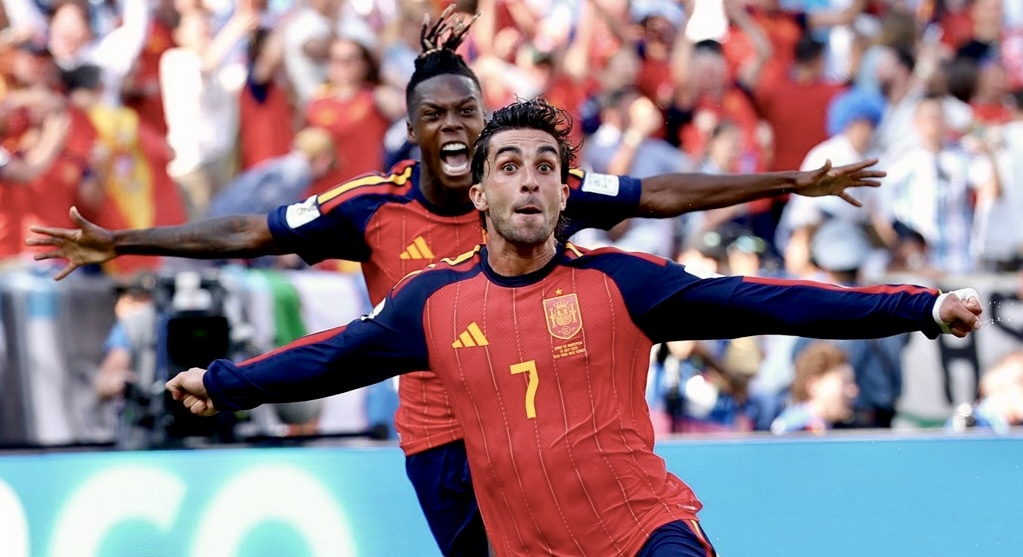
A dramatic 106th-minute winner from Ferran Torres secured a deserved 1-0 victory over Argentina after extra time in the 2026 FIFA World Cup final in New York, delivering La Roja their second World Cup title and writing another unforgettable chapter in Spanish football history.
The triumph carried echoes of Spain’s first World Cup success in 2010. Just as Andrés Iniesta’s extra-time strike against the Netherlands ended a tense, goalless final in South Africa, another Barcelona star stepped up on the biggest stage. This time, Ferran Torres became the national hero, scoring in the second period of extra time to seal football’s ultimate prize.
From the opening whistle, Spain looked the more composed and creative side. Fresh from their UEFA Euro 2024 triumph, Luis de la Fuente’s men dominated possession and created the clearer chances against the defending champions.
Lamine Yamal and Mikel Oyarzabal both tested Emiliano Martínez in the first half, while Argentina struggled to impose themselves and increasingly relied on disrupting Spain’s rhythm rather than creating opportunities of their own.
Despite Spain’s dominance, Martínez produced a series of outstanding saves to keep Argentina alive. He denied Yamal with a brilliant late free-kick stop in normal time before making another crucial save from Nico Williams’ header in extra time.
While the occasion promised fireworks, the contest itself became a battle of endurance rather than attacking brilliance. Frequent stoppages interrupted the flow, and the tournament’s first-ever 27-minute halftime show further slowed the game’s momentum.
Off the pitch, the spectacle remained enormous. President Donald Trump arrived in New Jersey aboard one of a fleet of helicopters ahead of kick-off, highlighting the global attention surrounding football’s biggest event.
The match reached its boiling point deep into stoppage time when Argentina midfielder Enzo Fernández received his second yellow card after a reckless challenge on Pau Cubarsí, reducing the defending champions to ten men before extra time began.
With the numerical advantage finally beginning to show, Spain found the breakthrough they had been searching for.
In the 106th minute, substitute Nico Williams headed the ball into the path of Ferran Torres, who reacted instinctively, firing a powerful close-range finish beyond Emiliano Martínez to send the Spanish supporters into celebration.
La Roja registered 20 shots compared to Argentina’s meagre two, consistently looking the more dangerous side despite Martínez’s heroics between the posts. The victory was fully deserved and capped another remarkable tournament for a team that has established itself as the dominant force in international football.
Spain are now unbeaten in their last 38 matches in all competitions, the longest ever run by any European or South American team in history.
For Argentina, the defeat marked a disappointing end to what was expected to be Lionel Messi’s final World Cup appearance.
Having inspired his country to glory four years earlier, Messi found himself largely anonymous as Spain controlled possession and denied Argentina any sustained attacking momentum. The Albiceleste had previously fought back to eliminate Egypt and England in the knockout rounds, but there would be no comeback in the final.
